One street, whole film
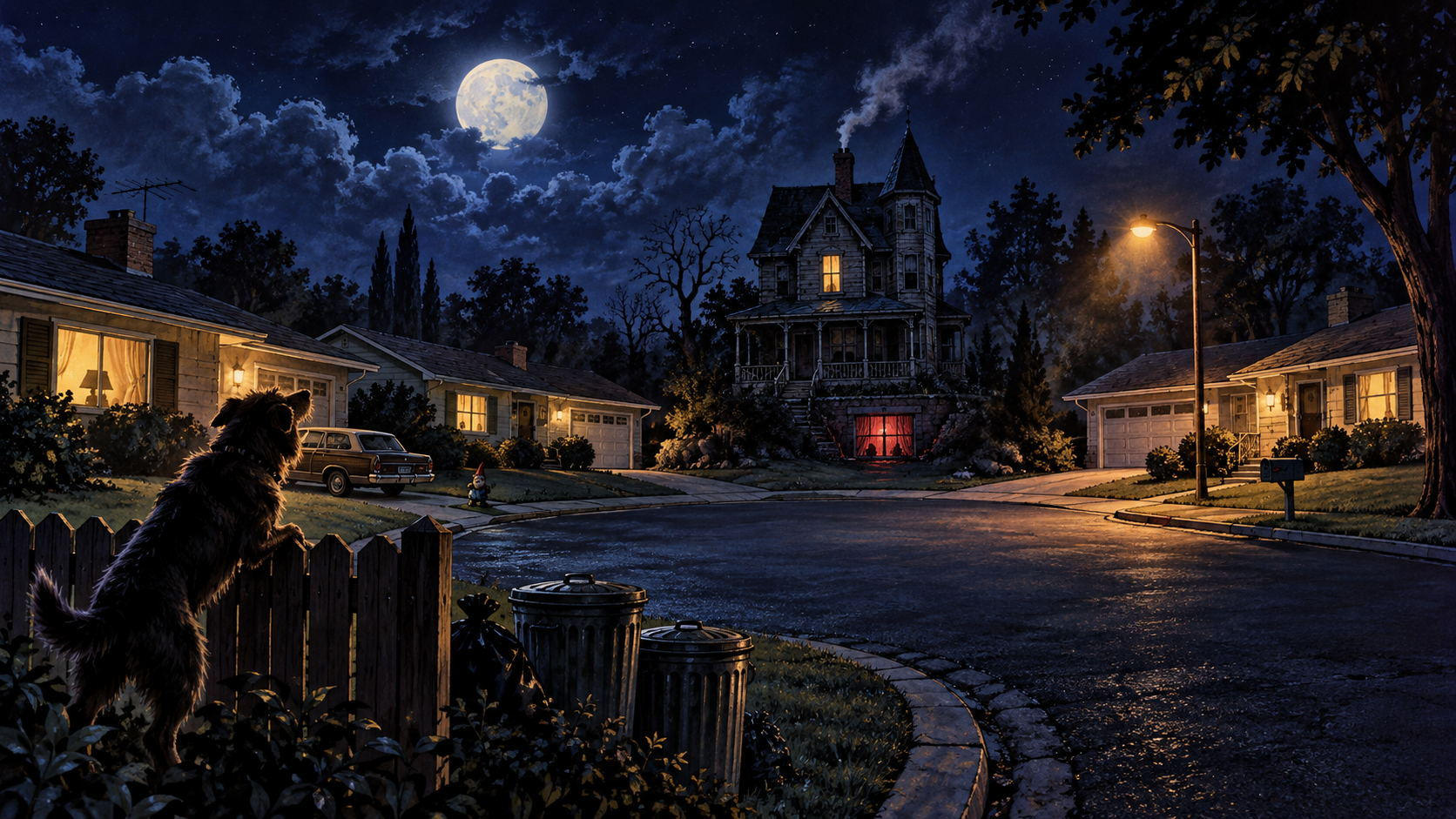
The production was filmed at Universal Studios, using the Colonial Street backlot as Mayfield Place. Keeping almost the entire story on one block gives the film the unity of a stage comedy while allowing elaborate stunts, explosions and moving-camera gags that need cinematic space.
The familiar backlot had already appeared in film and television. Production designer James H. Spencer transformed the street into a carefully contrasted neighbourhood: tidy, recognisable homes around a decayed Klopek property that looks as if it has wandered in from another genre.
A chronological shoot
Joe Dante has explained that the production filmed in story order during the 1988 writers’ strike. Because the screenplay could not be formally rewritten on set, shooting sequentially made it easier for the actors’ ad-libs and evolving character behaviour to influence later scenes.
Three endings
Dante has also recalled that three endings were filmed. Preview reactions helped move the finished film away from a version that judged Ray and his friends more harshly. The final turn allows Ray to be both wildly irresponsible and, at the last moment, right about the danger.
The sound of the street
Jerry Goldsmith’s score treats suburbia with playful grandeur. Military rhythms suit Rumsfield, suspense writing magnifies small domestic clues and broad comic accents keep the film from becoming a straight horror picture.